Growing Our Neighborhoods — and Getting It Right
What proposed zoning near Neighborhood Centers & Transit Corridors could mean for Wallingford & Tangletown
Seattle is growing, and neighbors broadly agree: we need more housing.
But the decisions being made now will shape what kind of housing gets built — and whether Seattle continues to support family‑sized homes alongside studios and one‑bedroom apartments.
Why family‑sized housing must be part of the plan
Many neighbors support adding housing, including increased density near transit and shops. What’s missing from current proposals is a clear commitment to encouraging family‑sized housing — both rental and ownership.
- No requirements or incentives for family‑sized homes in proposed Lowrise 3 (LR3) zoning
- LR3 zoning most often results in studios and one‑bedroom units, because these maximize financial return under unlimited density
- When zoning strongly favors small units and removes limits on unit count, larger homes with multiple bedrooms are less likely to be built
Seattle invests heavily in schools, parks, libraries, and neighborhood amenities. Residents want zoning choices that align with those investments by making room for households with children and multi‑generational families — not just smaller households.
What’s already been approved — Phase 1
On December 16, 2025, Seattle City Council passed CB 120993, permanently implementing Washington State’s HB 1110 Middle Housing law as Phase 1 of the One Seattle Plan.
This already added substantial housing capacity across Neighborhood Residential (NR) zones (formerly “single‑family”):
- 4–6 homes on most residential lots
- Duplexes, triplexes, fourplexes, townhouses, cottage housing, and stacked flats
- Increased flexibility near major transit
- Subdivision options that allow ownership or shared land ownership
Seattle already has citywide opportunities for modest‑scale, family‑oriented housing growth.
What’s being decided now — Phase 2
City Council is now considering Phase 2 zoning legislation (March 19 – June 18, 2026) focused on:
- Neighborhood Centers (30 citywide)
- Frequent transit corridors
- Expanded Lowrise and Neighborhood Commercial zoning
Two public hearings:
- Monday, April 6
- Thursday, May 29
Why Wallingford & Tangletown neighbors are concerned
Wallingford transit corridors
Along frequent bus routes 31, 32, and 62, proposals would rezone over 30 blocks of current Neighborhood Residential streets currently zoned NR — those facing Meridian Ave N, N 40th Street, Wallingford Ave N, and N 35th Street — from NR to Lowrise 3 (LR3) zoning.
These blocks currently support 1–2 story homes, duplexes, small 2–3 story apartments, courtyard‑scale housing, and sixplexes. Under proposed LR3 zoning, these same lots could be redeveloped with:
- 5‑story apartment buildings
- No limit on number of units
- 80% lot coverage
- 5‑foot front setbacks
The concern is that existing family‑sized homes and apartments could be replaced with predominantly studio and one‑bedroom units, without encouraging 3-4 bedroom units, reducing opportunities for families to live along these corridors.
Tangletown Neighborhood Center
In Tangletown, Phase 2 proposals would:
- Eliminate all Neighborhood Residential zoning within the proposed Neighborhood Center
- Rezone roughly 400 residential lots from NR to LR3
- Allow 5‑story buildings adjacent to 1–2 story homes
- Remove unit caps and significantly reduce shared outdoor space
The result could be the loss of existing family‑sized housing without creating comparable family‑friendly replacements.
This isn’t about saying “no” to growth
It’s about aligning growth with community needs. Residents across Wallingford and Tangletown support more housing near shops and transit, reducing sprawl and car dependence, and welcoming new residents citywide.
What they’re asking for is intentional zoning that supports both smaller households and families, rather than zoning that strongly encourages studios and one‑bedroom apartments by allowing unlimited units per lot to maximize building yield.
Is there a middle path? Yes.
Neighborhood Residential (NR) zoning offers a balanced approach — designed to add housing while supporting everyday neighborhood life:
- Encourages stacked flats and family‑sized homes
- Allows 3–4 story buildings (height cap at 3 stories, with a stacked‑flat exception up to 42 feet / approx. 4 stories)
- Maintains front setbacks and 50% lot coverage for daylight, trees, gardens, and social space
- Includes unit caps, making family‑sized homes more feasible
- Supports growth while keeping neighborhoods welcoming and livable
Community members support retaining NR zoning in Neighborhood Centers like Tangletown and along neighborhood‑scale transit corridors where buildings are currently 1–3 stories. This approach allows Seattle to add homes without losing family‑friendly housing choices.
Why speak up
These decisions are being made now. Hearing from residents who support housing growth thoughtfully helps the City Council make better choices.
A short email, phone call, or public comment makes a difference!
How to make your voice heard
1. Show up
Attend the Monday, April 6 City Council meeting at City Hall and sign up to speak.
- Online public comment sign-up begins at 8:30 AM
- In-person public comment starts at 2 PM and typically runs past 6:30 PM
- Arrive as early as you can to get in line for public comment
2. Email and call your councilmember
Emails matter — as do phone calls. Share your street and your story. We recommend CC’ing all of City Council and the Mayor.
| District / Seat | Name | Phone | |
|---|---|---|---|
| District 4 — Wallingford | Maritza Rivera | Maritza.Rivera@seattle.gov | (206) 684‑8804 |
| District 6 — Tangletown | Dan Strauss | Dan.Strauss@seattle.gov | (206) 684‑8806 |
| Citywide Position 8 | Alexis Mercedes Rinck | AlexisMercedes.Rinck@seattle.gov | (206) 684‑8808 |
| Citywide Position 9 | Dionne Foster | dionne.foster@seattle.gov | (206) 684‑8809 |
| All Council Members | council@seattle.gov |
Mayor Katie Wilson: Contact form | (206) 684‑4000
3. Share this message with your neighbors
Post this on your block’s message board. Forward it. Hand it to a neighbor.
Suggested message to send to elected officials
Feel free to personalize this — even a few sentences in your own words make a stronger impact than a form letter.
Subject: Support Family‑Friendly Housing in Neighborhood Centers & Corridors
Dear Councilmember [Last Name],
I am a resident of Wallingford, and I’m writing about the proposed zoning changes in Neighborhood Centers and along corridors like Meridian Avenue N, N 40th Street, Wallingford Avenue N, and N 35th Street.
I support building more housing in Seattle, including near neighborhood‑serving business districts. The question is what kind of housing gets built, where, and at what scale — especially now that state law already creates substantial opportunities for new homes citywide. I want our neighborhoods to remain welcoming to both current residents and the next generation of families.
Family‑sized homes, including family‑sized rental homes, are increasingly hard to find in Seattle. Without intentional zoning, families can be priced out — even though access to Seattle’s schools, parks, and neighborhood amenities is a major reason families want to live here.
I’m concerned that the proposed expansion of Lowrise 3 (LR3) zoning extends beyond Neighborhood Center cores into surrounding residential streets, while not requiring or encouraging family‑sized homes, meaningful front setbacks, or gradual height transitions. LR3 zoning allows 5‑story buildings, up to 80% lot coverage, 5‑foot front setbacks, and no limits on units per lot — which strongly incentivizes studios and one‑bedroom units, and results in open space being pushed to private rooftop decks instead of shared, street‑level green space.
I encourage the Council to consider a more balanced approach by prioritizing Neighborhood Residential (NR) zoning in and around Neighborhood Centers and along neighborhood‑scale corridors. NR zoning already allows 4–6 homes per lot, encourages stacked flats and family‑sized units, and preserves setbacks for daylight, trees, and shared outdoor space.
Seattle can add housing and remain a place where families can live, grow, and stay. Thank you for considering this perspective.
Sincerely,
[Your Name]
[Your Address or Neighborhood]
For more information
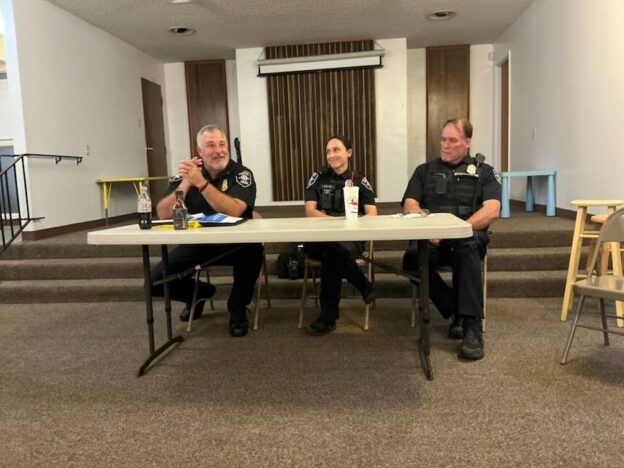
Attend the WCC Meeting — Wednesday, April 1, 2026 at 7 PM, Good Shepherd Center, Room 202
WCC website: wallingfordcc.org
Interactive zoning map: One Seattle Plan Zoning Map